


Olusegun Ariyo
Contents
The Lagos State Government has indicated its readiness to partner with the Nigerian Institute of Building (NIOB), Lagos State Chapter, to strengthen physical planning processes and ensure orderly, safe, and sustainable development across the State.The Commissioner for Physical Planning and Urban Development, Dr Oluyinka Olumide, disclosed this while receiving members of the Institute during a courtesy visit to the Ministry on Monday, December 15, 2025.Dr Olumide explained that the State Government’s focus was on proactive physical planning measures, stressing that effective development control begins from strict adherence to approved layouts, building plans, and professional standards at the earliest stages of construction. He maintained that compliance with planning regulations remained the most effective safeguard against structural failure, while linking failures in development outcomes to compromised planning standards, substandard designs, excessive client interference, political pressures, and human errors.According to the Commissioner, developments carried out without due regard to physical planning approvals and supervision by qualified professionals posed serious risks to lives, property, and the physical environment. Dr Olumide further stated that any construction site operating without the engagement of registered and competent building professionals should not be allowed to proceed, adding that the Ministry would continue to insist on professionalism and planning discipline across the State.The Permanent Secretary, Office of Physical Planning, Engr. Oluwole Sotire, emphasising the importance of sustained public awareness on planning laws and regulations, said that the government was open to deeper collaboration with professional bodies to strengthen compliance and enforcement, as early compliance with physical planning requirements would significantly reduce avoidable losses and wastage of resources. The General Manager of the Lagos State Informal Space Management Authority (LASISMA), Daisi Oso, highlighted the need for developers to adopt proper planning, conform to land-use regulations, and strictly adhere to approvals to significantly reduce development failures and promote a more orderly physical environment.Speaking on behalf of the Nigerian Institute of Building, the Chairman of the Lagos State Chapter, Owolabi Rasheed Ayoola, stated that the visit aimed to strengthen collaboration with the Ministry of Physical Planning and Urban Development, as a critical stakeholder in the built environment. His Words’’ ‘the Institute also used the opportunity to congratulate the Commissioner on his recent awards, describing them as recognition of his contributions to the sector.A veteran member of the delegation, Kunle Awobodu, who assured the Institute’s continued support for efforts toward promoting professionalism and compliance in the sector, said that non-compliance with approved building plans remained a major challenge within the building construction industry, while praising the Ministry for making positive impacts in entrenching planning discipline.
The Lagos State Government has indicated its readiness to partner with the Nigerian Institute of Building (NIOB), Lagos State Chapter, to strengthen physical planning processes and ensure orderly, safe, and sustainable development across the State.
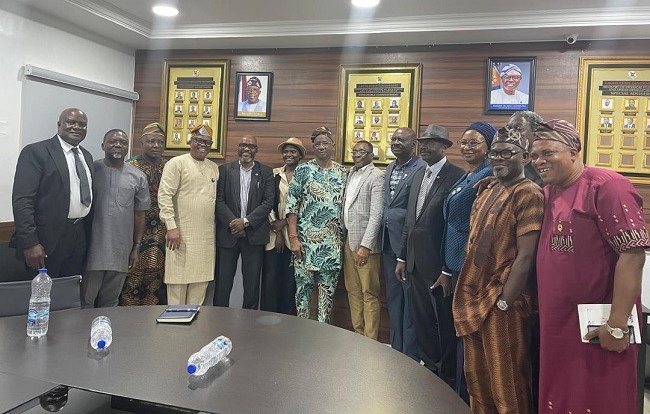
The Commissioner for Physical Planning and Urban Development, Dr Oluyinka Olumide, disclosed this while receiving members of the Institute during a courtesy visit to the Ministry on Monday, December 15, 2025.
Dr Olumide explained that the State Government’s focus was on proactive physical planning measures, stressing that effective development control begins from strict adherence to approved layouts, building plans, and professional standards at the earliest stages of construction.
He maintained that compliance with planning regulations remained the most effective safeguard against structural failure, while linking failures in development outcomes to compromised planning standards, substandard designs, excessive client interference, political pressures, and human errors.
According to the Commissioner, developments carried out without due regard to physical planning approvals and supervision by qualified professionals posed serious risks to lives, property, and the physical environment.
Dr Olumide further stated that any construction site operating without the engagement of registered and competent building professionals should not be allowed to proceed, adding that the Ministry would continue to insist on professionalism and planning discipline across the State.
The Permanent Secretary, Office of Physical Planning, Engr. Oluwole Sotire, emphasising the importance of sustained public awareness on planning laws and regulations, said that the government was open to deeper collaboration with professional bodies to strengthen compliance and enforcement, as early compliance with physical planning requirements would significantly reduce avoidable losses and wastage of resources.
The General Manager of the Lagos State Informal Space Management Authority (LASISMA), Daisi Oso, highlighted the need for developers to adopt proper planning, conform to land-use regulations, and strictly adhere to approvals to significantly reduce development failures and promote a more orderly physical environment.
Speaking on behalf of the Nigerian Institute of Building, the Chairman of the Lagos State Chapter, Owolabi Rasheed Ayoola, stated that the visit aimed to strengthen collaboration with the Ministry of Physical Planning and Urban Development, as a critical stakeholder in the built environment.
His Words’’ ‘the Institute also used the opportunity to congratulate the Commissioner on his recent awards, describing them as recognition of his contributions to the sector.
A veteran member of the delegation, Kunle Awobodu, who assured the Institute’s continued support for efforts toward promoting professionalism and compliance in the sector, said that non-compliance with approved building plans remained a major challenge within the building construction industry, while praising the Ministry for making positive impacts in entrenching planning discipline.