

URBANEXPRESSLIVEURBANEXPRESSLIVEURBANEXPRESSLIVE
  • Home
  • Politics
    Politics
    “Followers who tell the truth, and leaders who listen to it, are an unbeatable combination.”— Warren Bennis
    Show More
    Top News
    Democratic System In Nigeria Gradually Lossing Popularity, Primate Ayodele Tells Tinubu
    August 25, 2024
    ‘We’re Not Barren But Fruitful, Obaseki’s Wife Response Against oshiomhole’s Outburst
    September 8, 2024
    Outstanding  Salaries: we’ll Embark On Nationwide Strike, SSANU, NASU Warns FG
    September 19, 2024
    Latest News
    Osun Governor, Ademola Adeleke, Resigns From PDP, Says Party Crisis Behind Decision 
    December 2, 2025
    Imposition of Curfew In Igbajo, Osun APC, PDP Trade Blame
    December 2, 2025
    PDP Says Provocation of Obaseki Remains Destructive Politics of Okpebholo’s Administration
    December 2, 2025
    Don’t Seek Re-election, Baba Ahmed Advised President Tinubu 
    December 1, 2025
  • Entertainment
  • Urban & Rural Lifestyle
  • Column
  • Environment
  • Urban Sports
  • Crime Lence
  • More Links
    • About Us
    • Contact us
    • Advertise
Search
  • Advertise
© 2024 Urbanexpresslive. All Rights Reserved.
Reading: COP20: How  Cities In Decisions On Trade Regulation Imminent For Big Cats, Trees, Sharks, Cucumber 
Share
Notification Show More
Font ResizerAa
URBANEXPRESSLIVEURBANEXPRESSLIVE
Font ResizerAa
  • Home
  • Politics
  • Entertainment
  • Urban & Rural Lifestyle
  • Column
  • Environment
  • Urban Sports
  • Crime Lence
  • More Links
Search
  • Home
  • Politics
  • Entertainment
  • Urban & Rural Lifestyle
  • Column
  • Environment
  • Urban Sports
  • Crime Lence
  • More Links
    • About Us
    • Contact us
    • Advertise
Follow US
  • Advertise
© 2022 Foxiz News Network. Ruby Design Company. All Rights Reserved.
URBANEXPRESSLIVE > web-Page > Urban Sports > COP20: How  Cities In Decisions On Trade Regulation Imminent For Big Cats, Trees, Sharks, Cucumber 
Urban Sports

COP20: How  Cities In Decisions On Trade Regulation Imminent For Big Cats, Trees, Sharks, Cucumber 

urbanexpresslive
Last updated: December 3, 2025 9:01 am
urbanexpresslive
Share
7 Min Read
SHARE

Taiwo Popoola

Contents
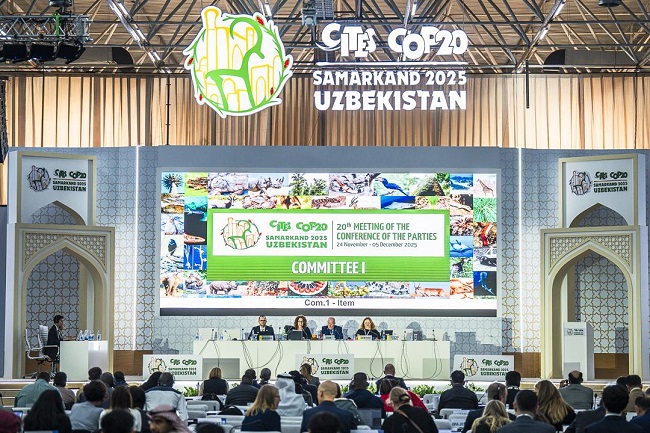
Midway through the 20th World Wildlife Conference, Parties to the Convention on International Trade in Endangered Species of Wild Fauna and Flora (CITES) are advancing decisions that will shape international trade regulation for big cats, tree and plant species, sea cucumbers, sharks, and more.Science‑driven cooperation continues to guide nations toward shared solutions for the conservation of species and the people who benefit from and rely on the sustainability of trade in them. With momentum building, Parties are preparing to finalise draft decisions and amended Resolutions for adoption in the closing plenary on December 4 to 5, 2025, where the Convention’s next three‑year agenda will be set.Nearly 3,400 participants have joined so far, including close to 1,000 government representatives from 163 Parties, alongside 209 observer organisations, more than 100 media representatives and numerous local participants. Together, they have already addressed 105 agenda items, achieving consensus on many and voting 29 times where necessary.Over 50 side events have complemented the negotiations, including the launch of new CITES e‑learning courses on InforMEA and trade sustainability assessment guidance, and updates from the International Consortium on Combating Wildlife Crime (ICCWC).CITES Secretary-General Ivonne Higuero said: “This halfway point shows the energy and commitment of Parties, observers, and partners. As we move forward, we rely on Parties to maintain the same positive spirit and constructive energy in building consensus. With this collective determination, we are confident that the work can be completed on time and deliver meaningful outcomes for wildlife and people alike.”Deliberations are proceeding in parallel within two Committees. Committee I, focusing on species‑related matters, began with African carnivores and terrestrial species, including lions, leopards, vultures, and the Joint CITES-CMS African Carnivores Initiative addressing cheetah, leopard, lion, and wild dog. Proposals on the dorcas gazelle, saiga antelope, giraffe and okapi are under review. Plant species have featured prominently, with agreement on revised guidance for agarwood and progress on African and Neotropical trees, guided by range State priorities. The Committee reviewed 10 proposals to amend the Appendices for plants, with ongoing debate on Brazil wood. Proposals concerning guggul, red doussié, African padauk, and Parlatore’s podocarp were rejected after voting. The adoption of Appendix I listing of the endemic and iconic Chilean palm was agreed by consensus. The Appendix II listings for two ponytail palms and four aloe species were also adopted. An amended annotation proposed for American ginseng was rejected.Aquatic species discussions covered non‑detriment findings, stony corals, and queen conch. Proposals on nine aquatic species proposals were accepted, including transfer to Appendix I for manta ray and whale shark (consensus), and, after a vote, the Oceanic whitetip shark. The proposal to include all anguillid eels in Appendix II was not agreed in Committee I, but a Resolution was agreed, and this Resolution is applicable to all anguillid eels.Zero annual export quotas were set for wild‑taken guitarfishes and wedgefishes already included in Appendix II, while school sharks and gulper sharks were agreed to be listed in Appendix II. Sea cucumbers saw mixed outcomes, with the Appendix II listing for Golden sandfish by consensus, the rejection of a proposal to list six other species of sea cucumber and the adoption of new decisions to guide workshops on conservation priorities and enforcement.Committee II, addressing implementation of the Convention, advanced administrative and financial matters, reaffirmed cooperation with UNEP, and tasked the budget working group with preparing recommendations for 2026–2028. Parties advanced several global policy matters, agreeing to enhance their work on CITES’ role in zoonotic disease risk mitigation.Deliberations moved to the inclusion of references to the new marine biodiversity agreement for areas beyond national jurisdiction in the CITES Strategic Vision. Parties agreed to endorse stronger cooperation with MEAs and approved to expand translations of Resolutions and Decisions. The draft gender action plan was adopted, with further work scheduled intersessionally.With regard to engagement with indigenous peoples and local communities, Committee II agreed to defer discussions on terminology pending work under the CBD glossary. Parties also agreed to publish the non-binding Guidance on the CITES website. Committee II debated the livelihoods agenda item, and the discussion was deferred pending an in‑session document.Elephant-related work progressed with the Committee noting the report of the Monitoring the Illegal Killing of Elephants (MIKE) Program, establishing an ETIS working group, and renewing support for both monitoring systems, updated stockpile provisions, and retirement of outdated measures such as mammoth ivory.While revised measures on closure of domestic ivory markets did not advance, strengthened measures for unsecured stockpiles were agreed by Committee II, alongside ongoing work concerning ETIS categorisation, NIAPs, legal acquisition findings, and acceptable destinations. Further progress in Committee II included sharing best practices on demand reduction for illegal wildlife products, updated compliance measures on totoaba to reinforce national enforcement and local community engagement, and species‑specific progress: integrating cheetah issues into the Big Cats Task Force, expanding measures for Asian big cats, retaining leopard decisions, and new guidance on captive tiger management. Work also advanced on jaguar conservation, continued on great apes, and remains under discussion for saiga antelope.There is a substantial agenda to get through still in the Committee stages. As the second week began on December 2, Parties worked to finalise draft decisions and amended Resolutions for adoption in plenary on December 4 and 5. The 80th meeting of the Standing Committee (SC80) will convene in the afternoon of December 5 to establish the intersessional work programme, which will guide scientific, technical, and compliance‑related efforts until the next World Wildlife Conference (CoP21).


Midway through the 20th World Wildlife Conference, Parties to the Convention on International Trade in Endangered Species of Wild Fauna and Flora (CITES) are advancing decisions that will shape international trade regulation for big cats, tree and plant species, sea cucumbers, sharks, and more.

Science‑driven cooperation continues to guide nations toward shared solutions for the conservation of species and the people who benefit from and rely on the sustainability of trade in them. With momentum building, Parties are preparing to finalise draft decisions and amended Resolutions for adoption in the closing plenary on December 4 to 5, 2025, where the Convention’s next three‑year agenda will be set.

Nearly 3,400 participants have joined so far, including close to 1,000 government representatives from 163 Parties, alongside 209 observer organisations, more than 100 media representatives and numerous local participants. Together, they have already addressed 105 agenda items, achieving consensus on many and voting 29 times where necessary.

Over 50 side events have complemented the negotiations, including the launch of new CITES e‑learning courses on InforMEA and trade sustainability assessment guidance, and updates from the International Consortium on Combating Wildlife Crime (ICCWC).

CITES Secretary-General Ivonne Higuero said: “This halfway point shows the energy and commitment of Parties, observers, and partners. As we move forward, we rely on Parties to maintain the same positive spirit and constructive energy in building consensus. With this collective determination, we are confident that the work can be completed on time and deliver meaningful outcomes for wildlife and people alike.”

Deliberations are proceeding in parallel within two Committees. Committee I, focusing on species‑related matters, began with African carnivores and terrestrial species, including lions, leopards, vultures, and the Joint CITES-CMS African Carnivores Initiative addressing cheetah, leopard, lion, and wild dog. Proposals on the dorcas gazelle, saiga antelope, giraffe and okapi are under review. Plant species have featured prominently, with agreement on revised guidance for agarwood and progress on African and Neotropical trees, guided by range State priorities. 

The Committee reviewed 10 proposals to amend the Appendices for plants, with ongoing debate on Brazil wood. Proposals concerning guggul, red doussié, African padauk, and Parlatore’s podocarp were rejected after voting. The adoption of Appendix I listing of the endemic and iconic Chilean palm was agreed by consensus. The Appendix II listings for two ponytail palms and four aloe species were also adopted. An amended annotation proposed for American ginseng was rejected.

Aquatic species discussions covered non‑detriment findings, stony corals, and queen conch. Proposals on nine aquatic species proposals were accepted, including transfer to Appendix I for manta ray and whale shark (consensus), and, after a vote, the Oceanic whitetip shark. The proposal to include all anguillid eels in Appendix II was not agreed in Committee I, but a Resolution was agreed, and this Resolution is applicable to all anguillid eels.

Zero annual export quotas were set for wild‑taken guitarfishes and wedgefishes already included in Appendix II, while school sharks and gulper sharks were agreed to be listed in Appendix II. Sea cucumbers saw mixed outcomes, with the Appendix II listing for Golden sandfish by consensus, the rejection of a proposal to list six other species of sea cucumber and the adoption of new decisions to guide workshops on conservation priorities and enforcement.

Committee II, addressing implementation of the Convention, advanced administrative and financial matters, reaffirmed cooperation with UNEP, and tasked the budget working group with preparing recommendations for 2026–2028. Parties advanced several global policy matters, agreeing to enhance their work on CITES’ role in zoonotic disease risk mitigation.

Deliberations moved to the inclusion of references to the new marine biodiversity agreement for areas beyond national jurisdiction in the CITES Strategic Vision. Parties agreed to endorse stronger cooperation with MEAs and approved to expand translations of Resolutions and Decisions. The draft gender action plan was adopted, with further work scheduled intersessionally.

With regard to engagement with indigenous peoples and local communities, Committee II agreed to defer discussions on terminology pending work under the CBD glossary. Parties also agreed to publish the non-binding Guidance on the CITES website. Committee II debated the livelihoods agenda item, and the discussion was deferred pending an in‑session document.

Elephant-related work progressed with the Committee noting the report of the Monitoring the Illegal Killing of Elephants (MIKE) Program, establishing an ETIS working group, and renewing support for both monitoring systems, updated stockpile provisions, and retirement of outdated measures such as mammoth ivory.

While revised measures on closure of domestic ivory markets did not advance, strengthened measures for unsecured stockpiles were agreed by Committee II, alongside ongoing work concerning ETIS categorisation, NIAPs, legal acquisition findings, and acceptable destinations. 

Further progress in Committee II included sharing best practices on demand reduction for illegal wildlife products, updated compliance measures on totoaba to reinforce national enforcement and local community engagement, and species‑specific progress: integrating cheetah issues into the Big Cats Task Force, expanding measures for Asian big cats, retaining leopard decisions, and new guidance on captive tiger management. Work also advanced on jaguar conservation, continued on great apes, and remains under discussion for saiga antelope.

There is a substantial agenda to get through still in the Committee stages. As the second week began on December 2, Parties worked to finalise draft decisions and amended Resolutions for adoption in plenary on December 4 and 5. The 80th meeting of the Standing Committee (SC80) will convene in the afternoon of December 5 to establish the intersessional work programme, which will guide scientific, technical, and compliance‑related efforts until the next World Wildlife Conference (CoP21).

You Might Also Like

EPL: Why Palmer Didn’t Play Well-Ex-England Manager Question Maresca’s Tactics

Ogbu ‘New Boy’ in Super Eagle Gets Plaudits In Czech Republic

Fenerbahce was Mourinho gives Details On Talks To Take Charge of Portugal National Team

Turkey: Why Osimhen Dedicates Goal Against Antalyaspor To Galatasaray Coach

Tottenham, Chelsea Clash- How Maresca’s Man Ready To Emphasize EPL Title Ambitions

Sign Up For Daily Newsletter

Be keep up! Get the latest breaking news delivered straight to your inbox.
[mc4wp_form]
By signing up, you agree to our Terms of Use and acknowledge the data practices in our Privacy Policy. You may unsubscribe at any time.
Share This Article
Facebook Twitter Copy Link Print
Share
Previous Article 2026 World Cup: Why Ancelotti threatens To Drop Vinicius, Neymar from Brazil Squad
Leave a comment Leave a comment

Leave a Reply Cancel reply

Your email address will not be published. Required fields are marked *

Stay Connected

235.3kFollowersLike
69.1kFollowersFollow
11.6kFollowersPin
56.4kFollowersFollow
136kSubscribersSubscribe
4.4kFollowersFollow
- Advertisement -
Ad imageAd image

Latest News

2026 World Cup: Why Ancelotti threatens To Drop Vinicius, Neymar from Brazil Squad
Urban Sports December 2, 2025
Osun Governor, Ademola Adeleke, Resigns From PDP, Says Party Crisis Behind Decision 
Discover Politics December 2, 2025
AFCON 2025: Why NFF Set Semi-Final Target For Chelle
Urban Sports December 2, 2025
EPL: What Supercomputer Predicts Regarding Where Arsenal, Chelsea, Man City, Others Will Finish This Season
Urban Sports December 2, 2025
Executive Master of Transport Management
//

UrbanExpressNews is Nigeria Most Reliable Online News, With Quality Pedigree of Writers made available on the online space.

Download Our App

Sign Up for Our Newsletter

Subscribe to our newsletter to get our newest articles instantly!

info@urbanexpresslive.com


Follow US
© 2024 Urbanexpresslive. All Rights Reserved.
Welcome Back!

Sign in to your account